


The real question behind Small Soft Cooler Bag vs Traditional Cooler Box isn't which one cools better — a well-built hard cooler almost always wins on raw retention. The question is how far you're carrying it and how often, and that single variable decides which product actually gets used instead of left in a closet.
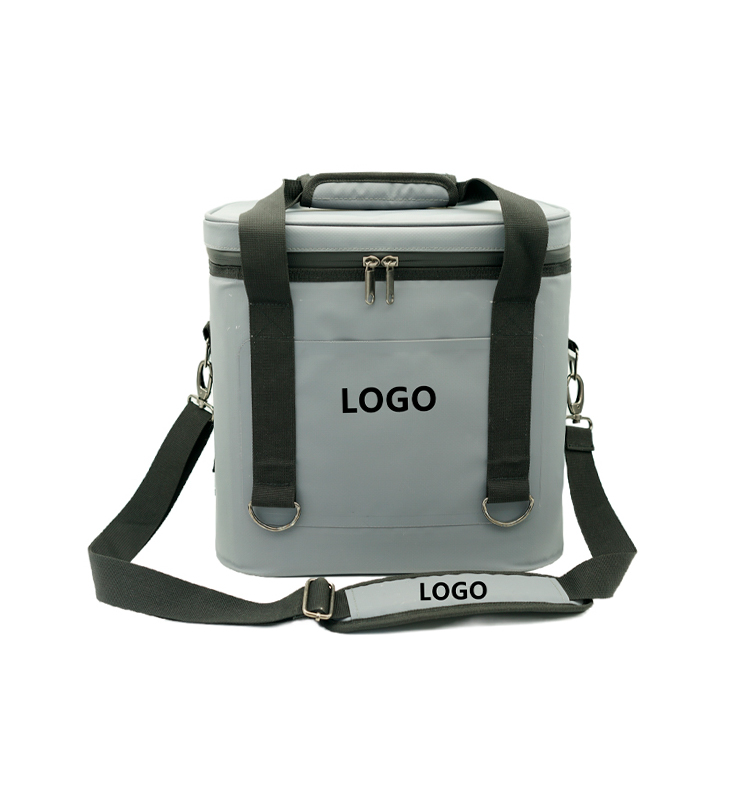
A small soft cooler bag builds an insulation layer, usually foam or foil-backed, between an outer fabric shell and a waterproof PEVA lining, closed with a zipper rather than a hinged lid. That fabric construction is what lets it fold flat, take a shoulder strap, and squeeze into a car trunk or under a seat — none of which a rigid shell can do.
A traditional cooler box relies on a rigid plastic shell packed with thick foam insulation, trading flexibility for impact resistance and sustained cold retention. That structure is why it remains the standard for multi-day camping and fishing trips where the cooler sits in one place for days rather than moving with the user.
| Structure | Flexible fabric | Rigid hard shell |
| Weight | Lightweight | Heavier |
| Storage after use | Folds flat | Fixed shape year-round |
| Best cooling window | Several hours to a day | Multiple days |
| Carrying method | Handle or shoulder strap | Handle only |
None of that makes soft coolers the right choice everywhere. A hard cooler box holds temperature longer, resists impact better, and handles far larger capacity — exactly what a multi-day fishing trip or a large outdoor event needs, and exactly where a soft bag runs out of insulation before the trip is over.
Check the activity. Hiking, picnics, and office lunches point to a soft cooler bag; fishing and multi-day camping point to a hard box.
Check the duration. A few hours of cooling favors soft construction; several days favors thick rigid insulation.
Check the transport. If it needs to be carried by hand or on foot for any distance, a strap-equipped soft bag will get used far more consistently than a box.
For day trips, commuting, and any activity involving walking, a Small Soft Cooler Bag vs Traditional Cooler Box comparison consistently favors the soft bag on portability. Reach for a hard cooler box only when the trip is long enough, or the group large enough, that maximum cold retention outweighs ease of carrying.
No — hard coolers hold temperature significantly longer due to thicker insulation walls, but soft bags cool well enough for same-day use.
Yes, for most soft coolers with quality insulation and a sealed lining, though ice retention drops off faster than in a rigid cooler as the day goes on.
Soft cooler bags fold flat and take up minimal space when empty, while hard coolers keep their full shape and need permanent storage room.
Only if those occasional trips are multi-day or high-capacity; for short, frequent outings a soft cooler bag gets more consistent use.
 |  |
Ang iyong email address ay hindi mai -publish. Ang mga kinakailangang patlang ay minarkahan *
Ang waterproof zipper backpack tpu portable soft cooler ay nagpapanatili ng pagkatuyo at lamig ...
Tingnan paAng mga panlabas na hindi tinatagusan ng tubig na mga bag ng pangingisda ay mga bag na multifunctional na kagamitan na idinisenyo para sa pangingisda en ...
Tingnan paAng pagsisimula sa isang paglalakbay sa kalsada o isang panlabas na pakikipagsapalaran ay madalas na may hamon ng angkop ...
Tingnan paSa mabilis na buhay ngayon, parami nang parami ang masigasig sa paglalakbay sa labas, paggalugad ng ...
Tingnan pa* Ang iyong email ay ligtas sa amin, hindi kami spam.

Propesyonal na R&D at Paggawa ng Panlabas na Palakasan, Pagbibisikleta, Pangingisda, Negosyo, Paglalakbay sa Pananahi, Mataas na Frequency Stamping Series ng Luggage Enterprises
E-mail: christine@fudabags.com
Phone: +86-13819351116
Add: No.2288 Xinggong Road, Pinghu City, Jiaxing City, Zhejiang Province, China
Copyright © 2025 by Bagong Fuda Luggages & Bags Co, Ltd. Rights Reserved.Custom na matibay na panlabas na tagagawa ng bag sa paglalakbay

